


Full Circle with Catherine Opie: Finding Focus, Community, and Creative Renewal at the Ranch
December 2, 2025
Posted In: Full Circle: Creativity for All
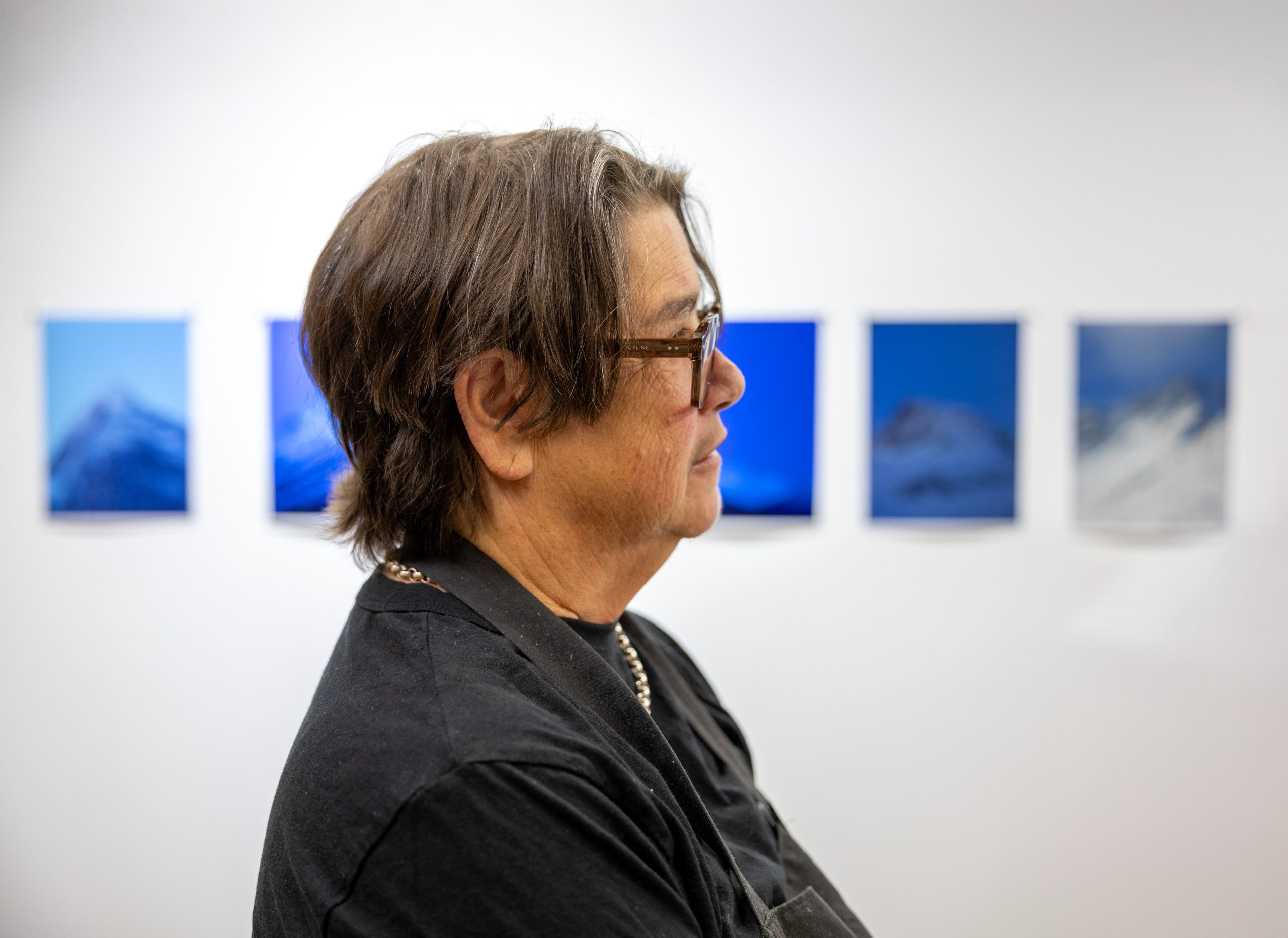
Catherine Opie’s work holds a cornerstone in contemporary photography, offering a powerful lens on the intricate ties between identity, community, and the American landscape. For decades, her portraits and landscapes have not just documented but defined subcultures and places, providing a perspective that is at once deeply personal and profoundly universal.
Her long-standing relationship with Anderson Ranch Arts Center is a testament to her commitment to creative community and mentorship. We had the honor of sitting down with Catherine to discuss her multifaceted practice, her evolving role at the Ranch, and the powerful connections that fuel her work.
Q: You’ve taken on various roles at the Ranch, from educator to Visiting Artist. How have these experiences shaped you?
Catherine: I want to add philanthropist to that list, because that’s a very important aspect of how much I love the Ranch. All three of those roles are exactly who I am in the world. All three of those, to use a cliché, are as important as a tripod to a camera.
It is years of educating through universities, years of exhibiting as an artist, and also really believing that without the support of philanthropy, we can’t move forward with the arts.
On a personal level, the most important thing is the ability for me to be at the Ranch and play with materials I’m not familiar with. For me to feel secure and not foolish as an artist to experiment, the Ranch gives you that permission. I obviously feel completely comfortable teaching photography; that’s my wheelhouse. But when I’m at the Ranch, I’m working with clay, which isn’t.
The profound expertise that the Ranch offers, as well as the equipment, is next-level. It’s the only place that I want to be to make things out of clay.
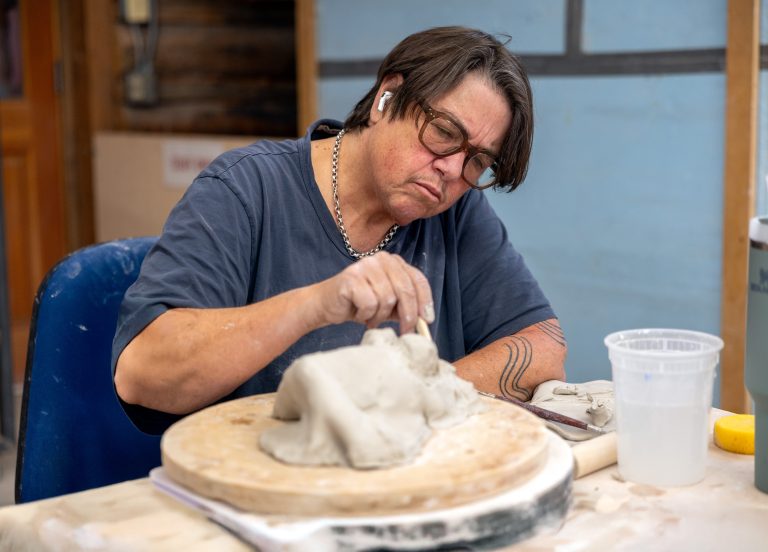
Q: During your recent time as a Visiting Artist, you created ceramic works that complement your mountain series. Can you share more about this body of work and how it connects to your broader artistic practice?
Catherine: When you get to your mid-60s, and get to be older and wiser, you’re able to connect different metaphors in one’s life. By literally going someplace and making pictures, there’s a whole sense of discovery, but that’s not the only discovery that happened within making this body of work.
The second level of discovery for me was trying to remember the mountains I photographed and building them at Anderson Ranch for three weeks.
The metaphor is also larger: mountains are also earth. So, using clay as earth just seemed like a very beautiful, poetic story for me to be part of.
Q: How has your time making art at the Ranch influenced your upcoming show at the PoMo Museum in Trondheim, Norway, in 2026?
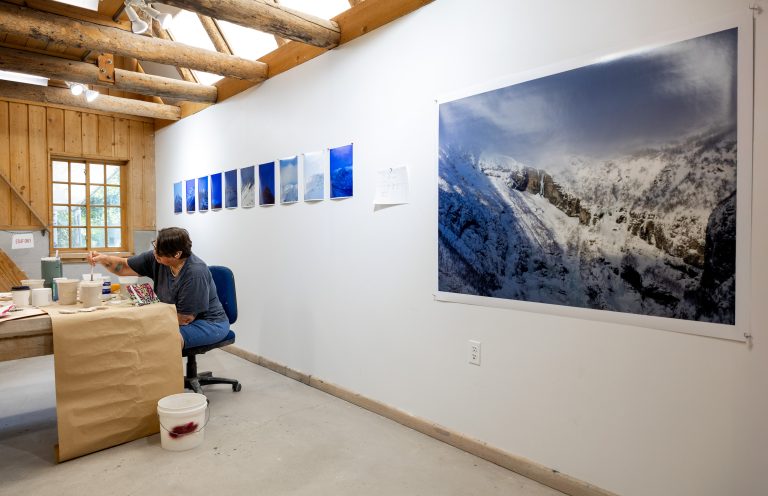
Catherine: There’s going to be a room inside the museum dedicated to the idea of fjords because that’s what Norway has—amazing fjords. This room will have a series of five photographs of fjords, and then there will be sculptural plinths that I designed with the mountains I made at Anderson Ranch, along with the mountains I made at UCLA. The ones I made at UCLA were the mountains I wanted to meet, and the ones I made at Anderson Ranch were the ideas of the mountains that I met.
Q: Can you talk about how having the space and time here supported this project?
Catherine: Oh, it’s everything.
Without the time there, without the support of the Ranch, without the amazing facilities, staff, and interns, none of this would have been possible.
I mean, I could have made it at UCLA, I suppose, but it wouldn’t have been as much fun and as interesting as the intensity of working seven days a week for three weeks to create this body of work.
Q: At the Ranch, we talk about this idea of “full circle,” how creativity thrives when access, mentorship, and generosity connect. How does your journey with the Ranch reflect this idea?
Without creativity and the support of institutions like the Ranch, we don’t have a fulfilling cultural dialogue.
Catherine: If we’re only watching the news of the day and going about our life, always wondering what’s going to happen in the world, then we’re not using creativity to its fullest. Why do art schools and these places need to exist? Because there are many of us in the world that can’t exist without these places. It provides an ability for critical thinking. If people don’t think art is about critical thinking, that it’s just about looking, that’s okay too. But for us who are makers, we are thinkers.
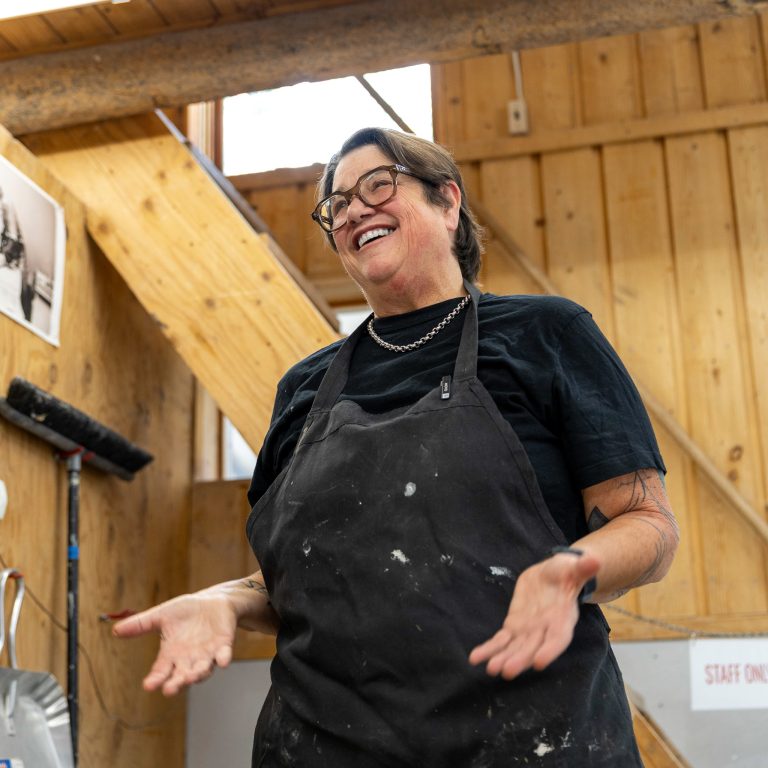
When supporters step in, the circle continues—keeping access, mentorship, and art-making alive for the next generation.
Join the Circle | Donate Today
