


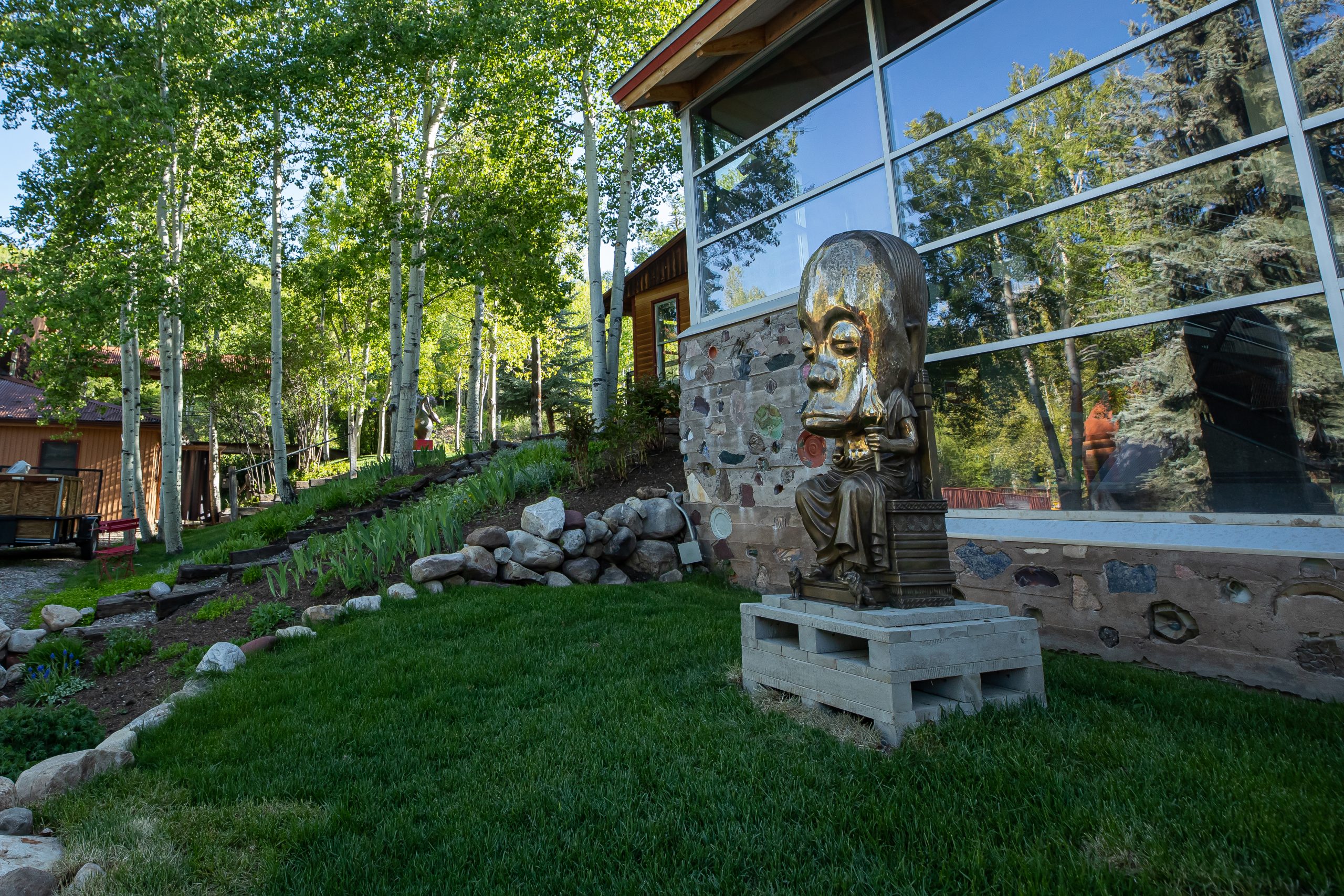
Outdoor Sculpture Exhibition
Anderson Ranch Arts Center is pleased to present our annual outdoor sculpture exhibition. Started in the summer of 2020, the exhibition features sculptures by local, national, and internationally acclaimed artists installed throughout the Ranch campus.
If you are interested in purchasing a sculpture, please call 970-924-5044 for more information.
Read about the participating artists below and tour the campus.
Campus Hours:
Monday – Thursday 10AM -3PM from October to May
Monday – Friday 8:30AM-5PM from June to September

Digital Self-Guided Tour
To learn about the outdoor sculpture exhibition and campus buildings, view the digital self-guided tour.
Current Sculptures
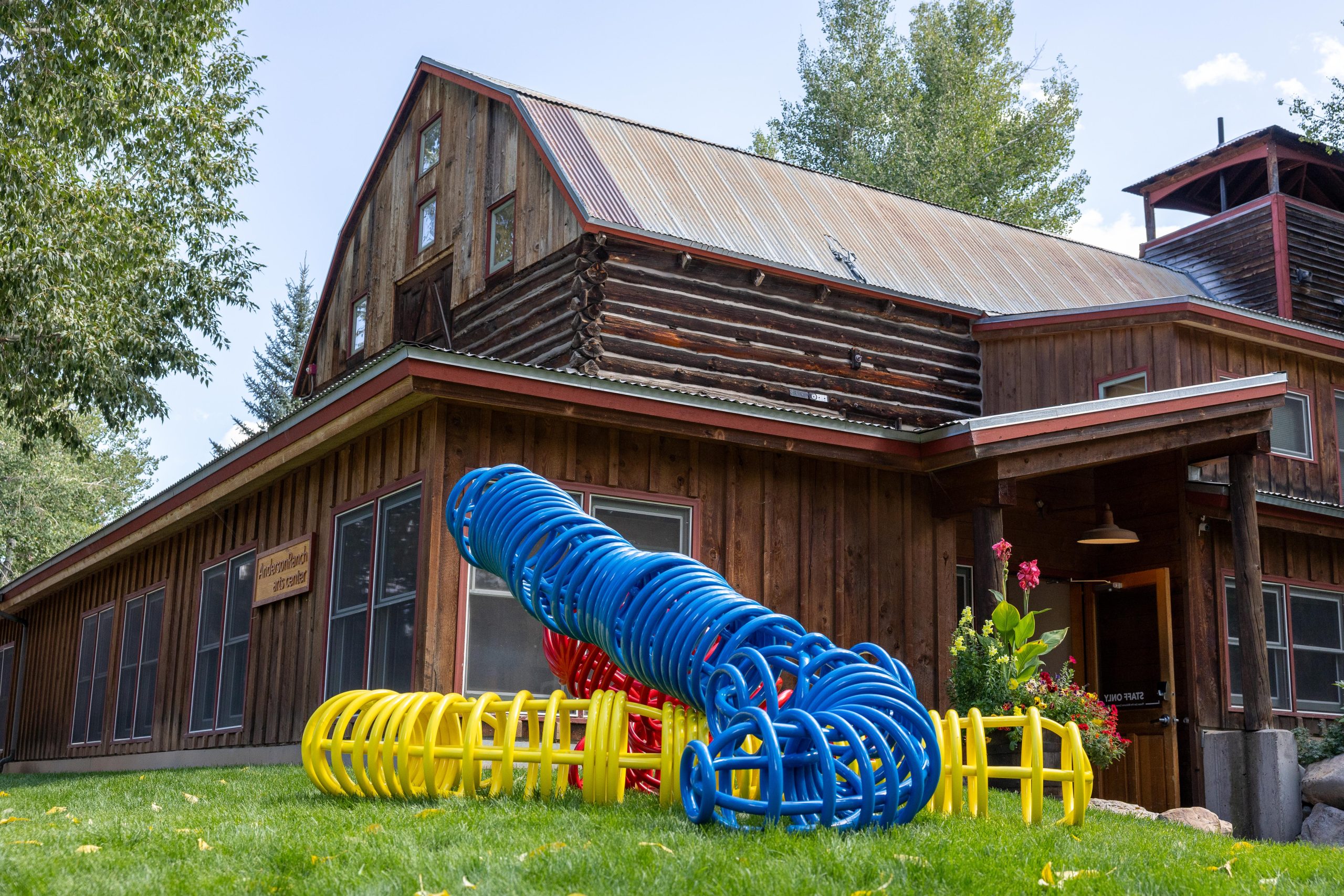
1. Bunny Burson and Leah Aegerter The Common Code, 2025 | Powder-coated stainless steel
Courtesy of the artists
The Common Code sculpture emerges from the meeting of two artistic journeys. Bunny Burson’s inspiration for this piece was sparked by her discovery of family letters that revealed a personal past once unknown. Leah Aegerter’s work explores the wide range of artistic possibilities that digital fabrication tools present, and how technology can transform the language of sculpture. Together, their collaboration bridges tradition and innovation, memory and material.
The interlocking chromosomal forms—rendered in steel as wireframe structures—reflect how our identities are encoded. The forms connect to the search for personal narrative and embody the translation of digital imagery into physical space. The work symbolizes the essential components that make us who we are, highlighting both our individuality and our collective humanity.
Through this collaboration, Burson and Aegerter transform the chromosome into a physical metaphor for inheritance, continuity, and commonality—reminding us that while our stories are unique, 99.9% of our genetic material is shared. What unites us, as their sculpture suggests, is far greater than what divides us.
2. James Surls Three and Ten Flowers, 2014 | Bronze and stainless steel
Courtesy of the artist
The Three and Ten Flowers sculpture was made to look as though it grew up from where it stands. Its design is registered by a circular evolution giving rise to rhythmic numbers, vines with patterned stems that produce mathematical forms and shapes, but still maintain a sense of sensual blossom. Flowering vines are always something to behold — in the American south you see them on fence rows, on river banks and in thickets.
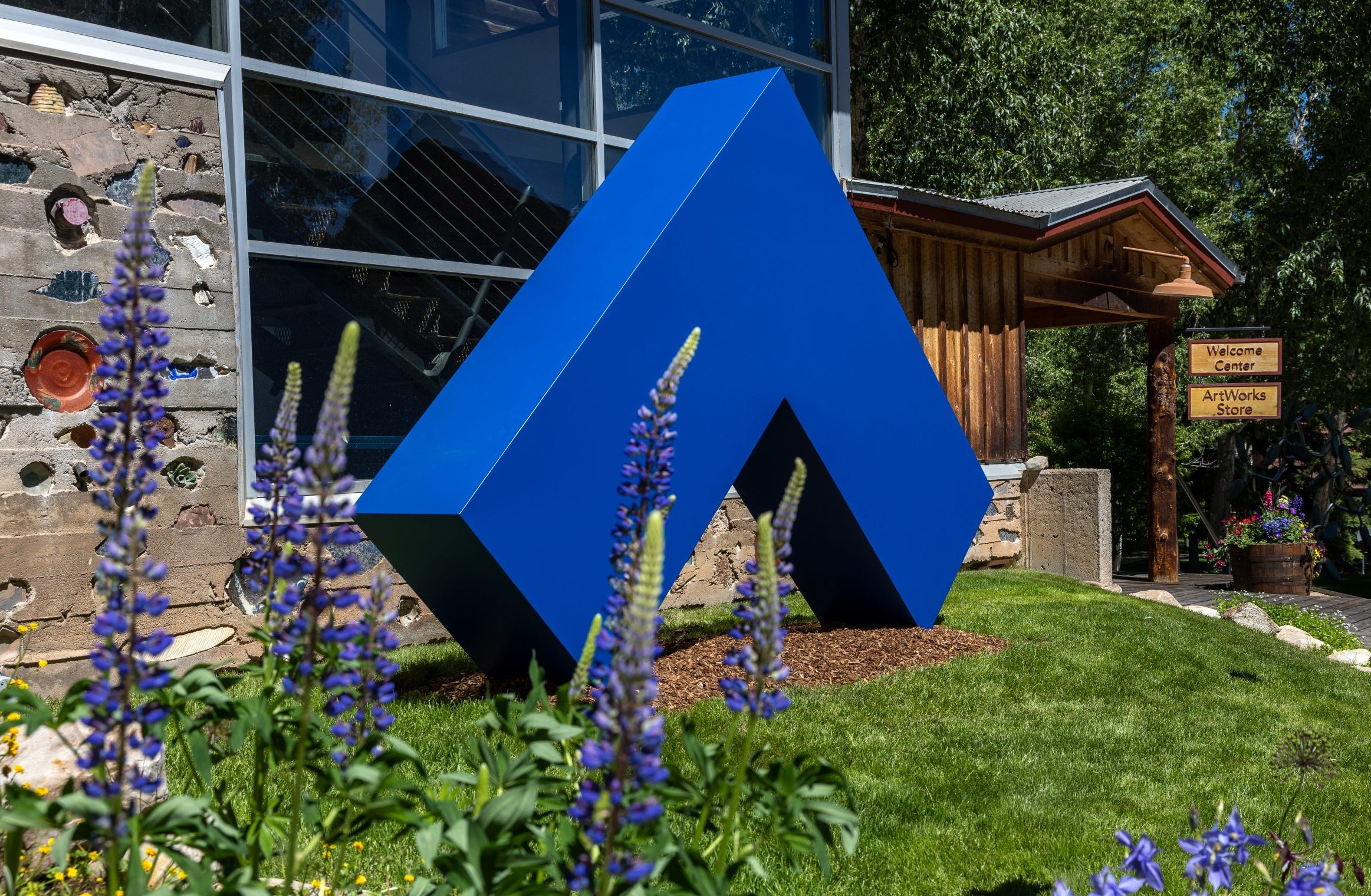
© Estate of Carmen Herrera

4. Mark Handforth (from left to right)
Form-Constant Orange, 2023 | Aluminum and polyurethane paint,
Hypnagogic Candy, 2023 | Aluminum and polyurethane paint,
Yellow Violet Sky, 2023 | Aluminum and polyurethane paint
Courtesy of the artist and Luhring Augustine Gallery
Mark Handforth’s works are interventions in space: they offer novel engagements within existing environments and assert new perspectives on familiar fixtures. His sculptures displace quotidian objects and recontextualize their forms in unexpected articulations. In some of his iconic works the bodies of streetlamps, traffic signs, and telephones whimsically buckle, twist, and droop. The seemingly defunct and defeated contortions of Handforth’s forms is countered by a gracefulness imparted by his meticulous craftmanship; this incongruity imbues the works with a wry humor and an endearing pathos. Incorporating materials such as spray-painted metals, burning candles, and neon lights, Handforth’s works reference urban streetscapes in their post-punk aesthetic and utilitarian minimalism, while the capricious scale and juxtapositions draw on the legacies of Surrealism and Dadaist absurdism.

5. Enrique Martínez Celaya The Savior, 2008 | Bronze
Courtesy of the artist
The Savior is a bronze sculpture from 2008, depicting a deer pulling his homeland with its mountain and lakes. The homeland is attached to the deer’s antlers suggesting that it is both a source of guidance and growth and also as an attachment to who we used to be.

6. Richard Lapedes Time Flies, 2020 | Brass plate and steel fittings
Courtesy of the artist
Time Flies began with the idea of the metaphor, “time flies” and then the artist selected materials and methods to realize this idea visually. This piece was created using no welding or traditional fasteners and is built entirely of identical modular pieces. Time Flies became itself because the steel plates seem so animated as to be flying. And thanks to time’s passage, the constantly changing rust and green patterns give biological life to these wings.
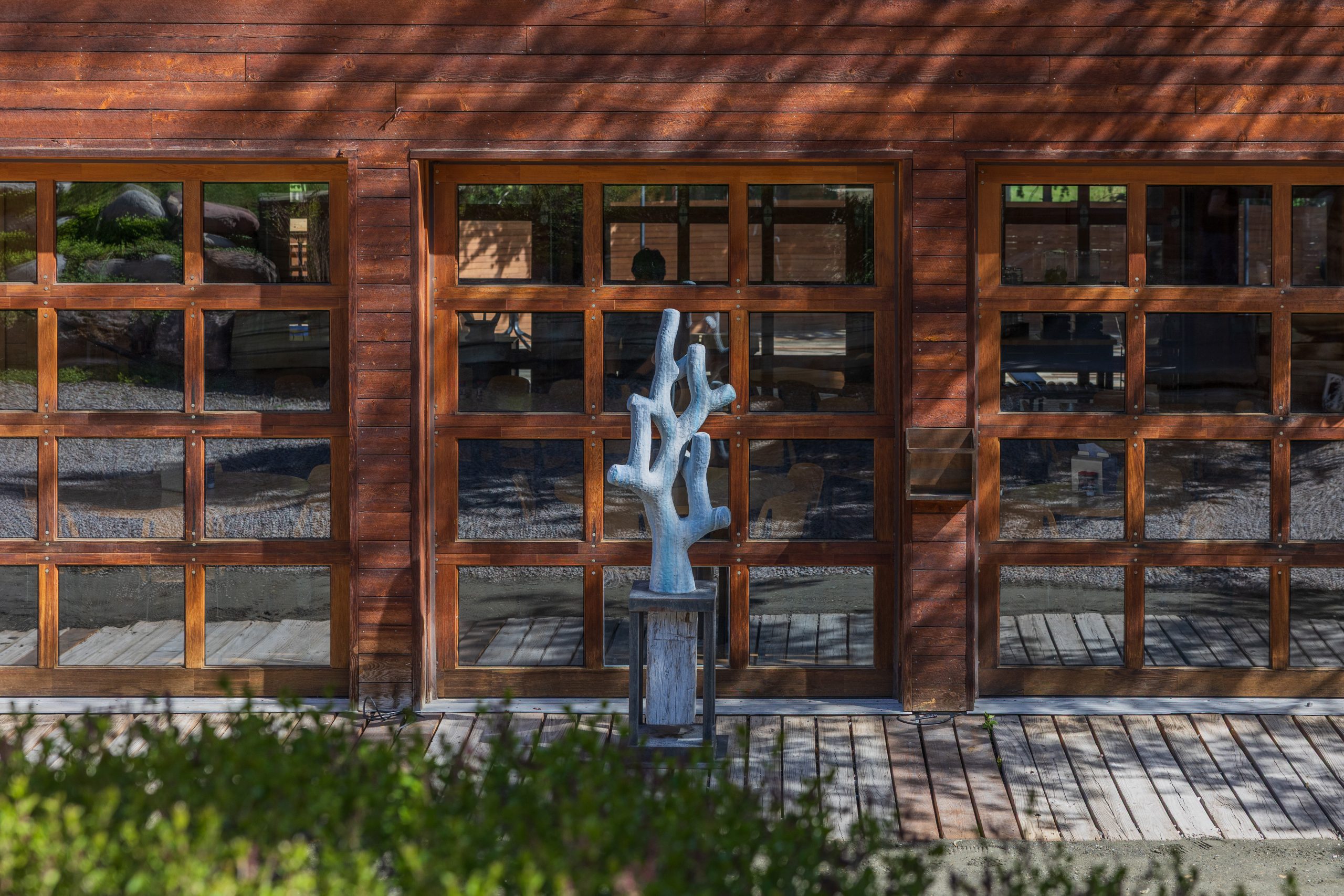
7. Trey Hill The Night the Stars Were Dark, 2023 | Ceramic, steel and wood
Courtesy of the artist and Harvey Preston Gallery, Aspen
The central form in Trey Hill’s The Night the Stars Were Dark is an idealized tree, drawn from Greek and Roman classical sculpture. Historically, this tree was used to support fragile marble figurative sculptures and keep them from breaking at the ankles. This element of the larger sculpture often goes unnoticed, as the exceptional carving of the human form consumes the viewer. He finds this to be an effective analogy for the many subtle ways we find to support each other.

8. John Buck The Assemblage, 1991 | Bronze
Courtesy of the artist
John Buck’s artwork is informed by contemporary issues, as well as the primitive and folk art of many cultures. The figure represents the human condition from which abstract compositions emanate. The subject of each sculpture can be inspired by social, political, and personal concerns. The headless form of the figure, the assemblage on its shoulders, and around it, at times has specific parallel, and at other times a more casual reference.

9. Jason Mehl Anthropocene, 2012 | Bronze on granite base
Courtesy of the artist
This sculpture’s seemingly geological form contrasts sharply with sections that were deliberately cut and removed. The final composition represents our species immutable mark on earth’s geological record. This new epoch in human history is known as the Anthropocene… a point in time where the record of our impact has become irreversible. All materials used in the sculpting and casting of this piece were reclaimed from industries that have contributed massively to this impact.
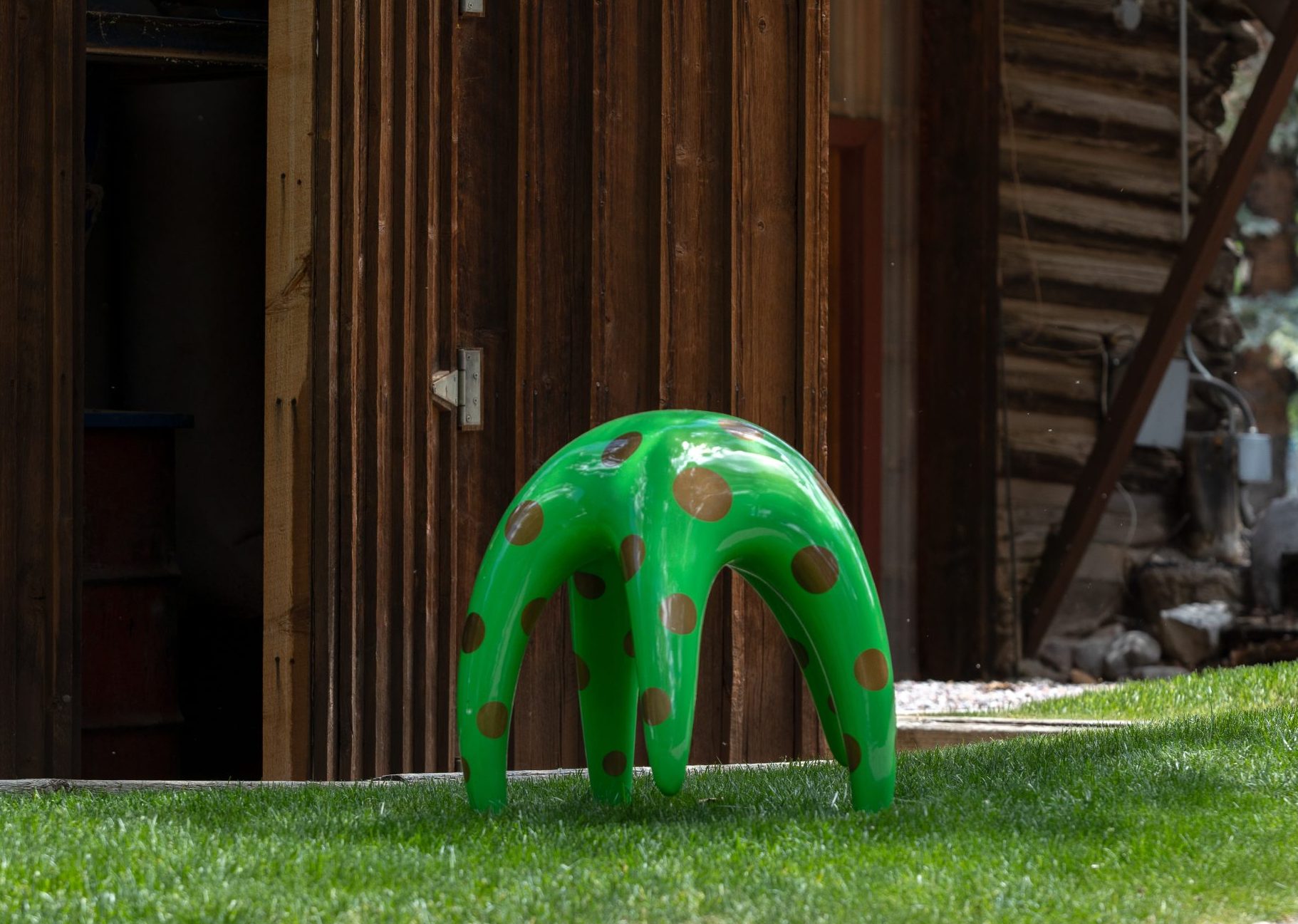
10. Masako Miki, Plant Ghost (Evergreen), 2022 | Cast bronze, automobile paint, and urethane
Courtesy of the artist and Ryan Lee Gallery
Masako Miki is a multimedia artist whose work ranges from installation and large-scale sculpture, printmaking, watercolor and felting. A native of Japan, she bases her works on her own experiences of becoming bicultural in the United States at the age of eighteen. Miki’s exploration of fluid identities is rooted in the Shinto belief of yaoyorozu no kami—a pantheon of eight million shapeshifting deities that define a world of shifting boundaries and identities. In Plant Ghost (Evergreen), Miki pictures a semi-abstract representation of one of these deities. With just three of its five feet grounded, the sculpture seems to lift off, suggesting a disoriented context and space.
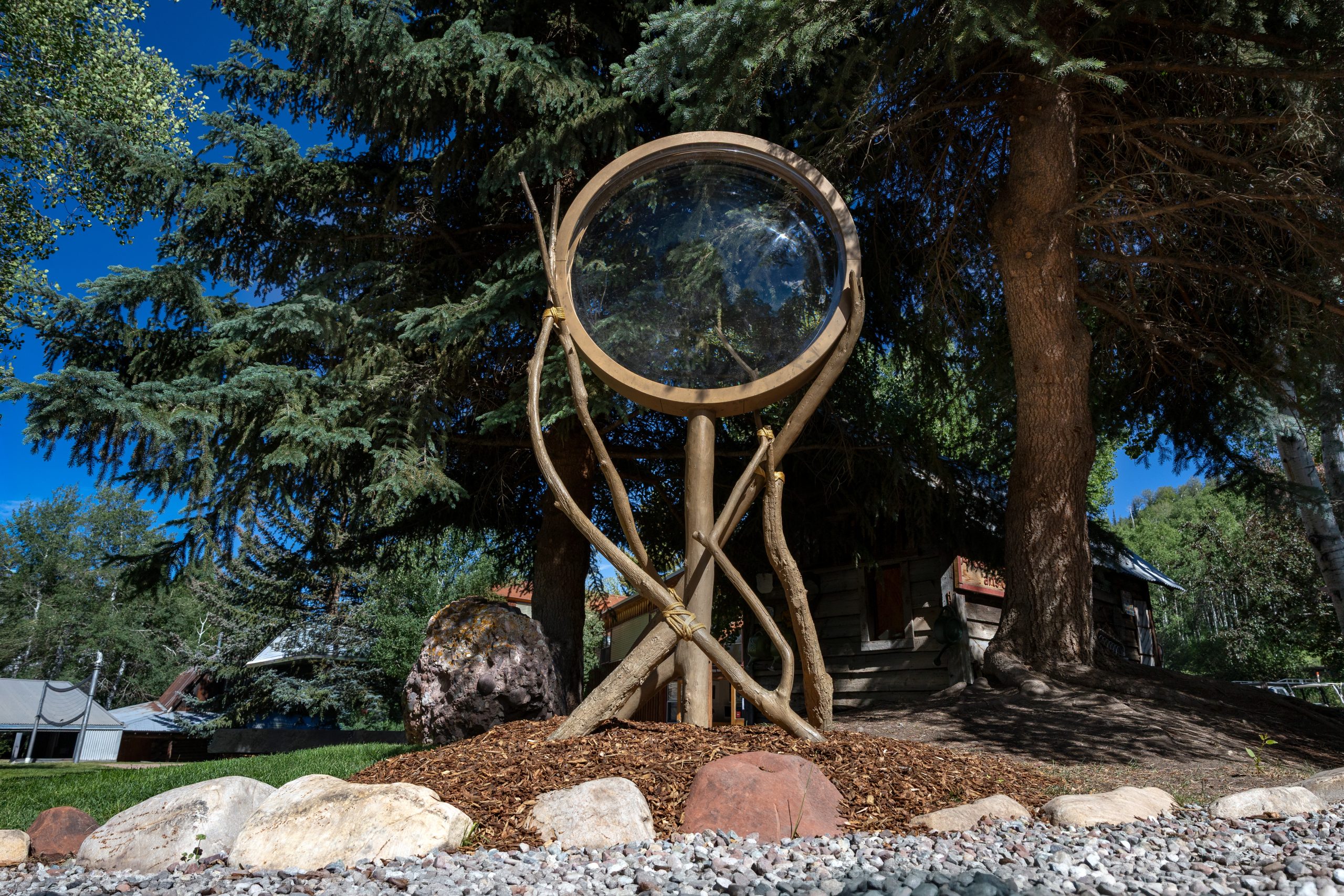
11. Kelly Akashi, A Device to See the World Twice, 2020 | Optical acrylic, bronze, rope
Courtesy of the artist and Lisson Gallery
Composed of a double-concave acrylic lens supported by several cast bronze
branches, A Device to See the World Twice is an apparatus for viewing. The
sculpture both condenses the landscape within its frame and allows visitors
to see their surroundings twice: once through the lens and once around it.
Inspired by the photographic process of fixing an image in a darkroom,
Akashi often casts natural forms in bronze, halting their development and
transforming them into relics of the original objects. Here, arrested in time,
the bronze tree branches anchor the lens, while the forest around the object
continues to evolve. At the same time, the lens focuses our attention on the
present moment, highlighting the entropy of the natural world.
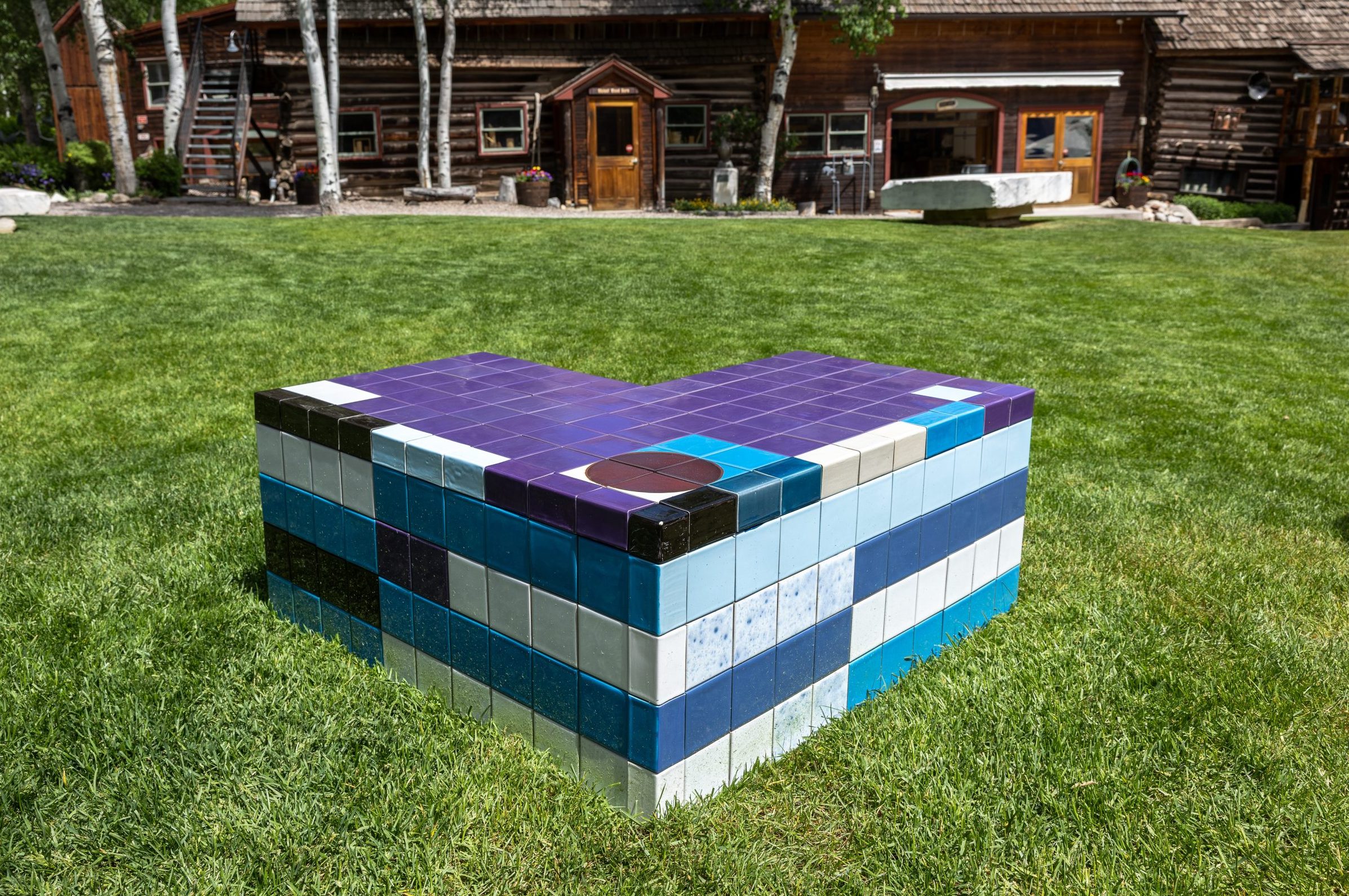
12. Claudia Weiser, Untitled, 2025 | Tiled sculpture, stainless steel and glazed ceramic tiles, mirror-polished steel
Courtesy of the artist, Boesky Gallery, New York and Aspen, and Jessica Silverman, San Francisco.
Covered in hand-painted ceramic tiles and mirror-polished steel, Claudia Wieser’s L-shaped Untitled (2025) embodies the artist’s ambitious, multi-faceted practice—which draws upon her deep knowledge of painting, her apprenticeship as a blacksmith, and her experience in set design to dissolve hierarchies of art and craft and distinctions between abstraction and figuration. Upon close inspection, the apparent geometry of Wieser’s work—particularly the hand-painted tiles and the hand-etched drawings in the mirror-polished steel —falls away as evidence of the artists hand at work emerges.
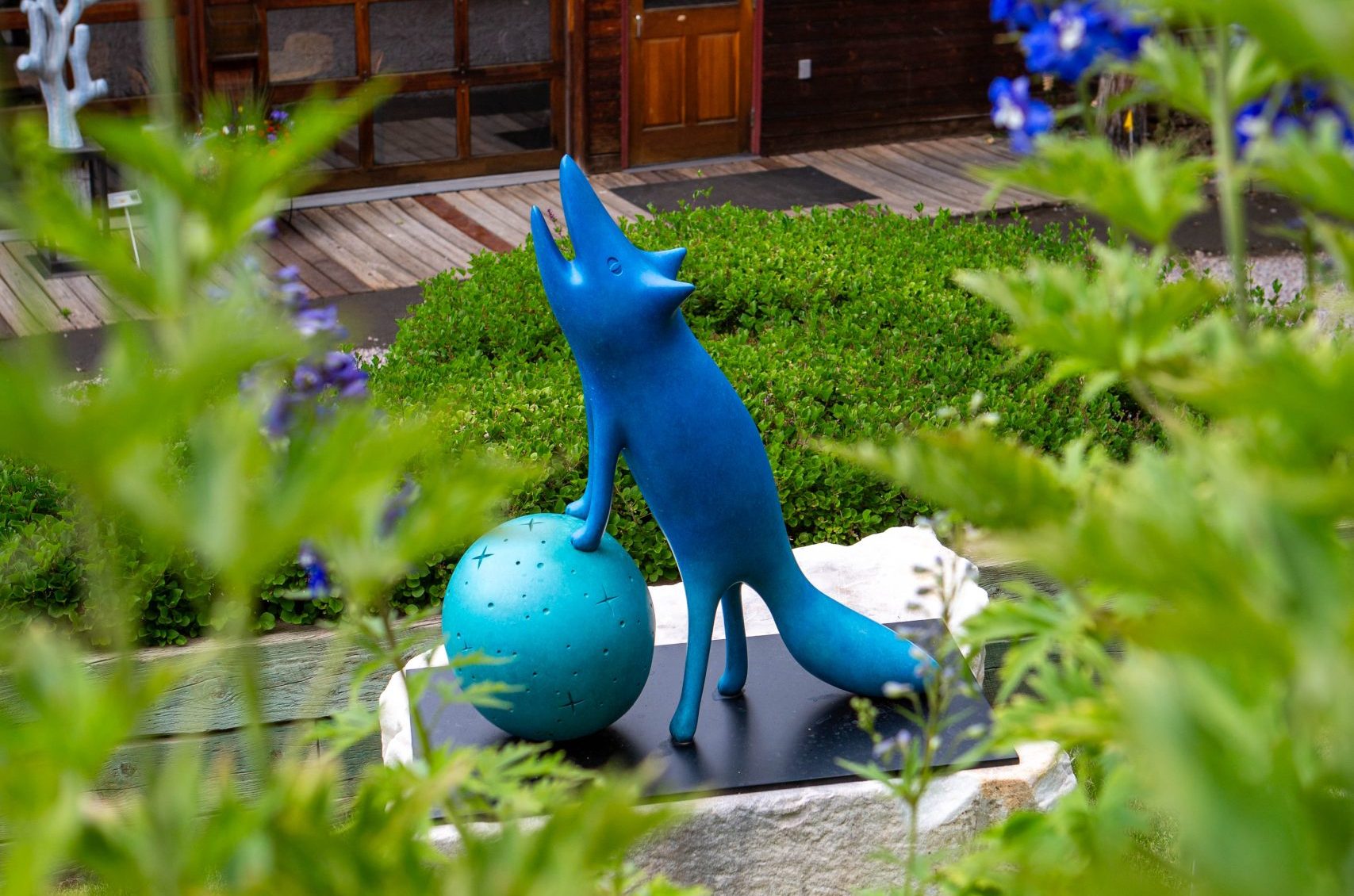
13. Masako Miki, Fox Delivering Messages, 2025 | Cast and patinated bronze
Courtesy of the artist and Jessica Silverman
Foxes are some of the most popular creatures in Japanese folklore, revered for their intelligence and associated with magical or supernatural powers. They often act as messengers between realms, shifting between forms and tricking or aiding humans. Miki’s bronze fox stands poised atop a globe that symbolizes the night, suggesting a deep connection to nocturnal mysteries and the unseen energies of the world. Through this figure, Miki draws a line between folklore and the psychological landscapes we traverse after dark.