


Ceramics
Code: C02W01-21
-
O
Open to All
Students of any skill and knowledge level.
-
CD
Critical Dialogue
-
Virtual Workshop
Virtual Workshop, learn from the comfort of your own home.
VIRTUAL WORKSHOP
Conversations on Clay
Jan 11 - Apr 7, 2021Past
Monthly- Mondays & Wednesdays, 3PM-4PM MST
Upcoming Workshops in Ceramics
-
 January Studio Sessions: Ceramics
Jan 4 - 29, 2027
January Studio Sessions: Ceramics
Jan 4 - 29, 2027
-
 Advanced Mentored Studies: Centering a Ceramic Studio Practice Through Material and Meaning
Aug 9 - 20, 2027
Advanced Mentored Studies: Centering a Ceramic Studio Practice Through Material and Meaning
Aug 9 - 20, 2027
Concept
Anderson Ranch invites you to join our online community to engage in a rigorous and stimulating Critical Dialog Program about the exciting world of contemporary ceramics. Through lectures and discussion each Monday and Wednesday (twice a month for four months), we connect to embark on a variety of topics that are crucial to today’s field of ceramics, giving participants the opportunity to reflect conceptually on this hands-on medium. This fall and winter we focus on the potential for ceramics to be socially engaging. Presenting artists join us in our dialog whose work plays an interactive role.
January 11 & 13 – Elyse Pignolet – You Should Calm Down: #Pottery is Political
Elyse Pignolet explores how engaging with social issues through her artwork is a way of confronting current political and social injustices. Pignolet discusses the potential for socially committed ceramics addressing themes in her work that deal with female transgression and empowerment, the dialectic between feminism and misogyny, inequality, gender stereotypes, and sexual harassment. She also asks: how does social media play a role in this 20,000-year-old medium?
February 8 & 10 – Garth Johnson – No Food in the Galleries: Reinventing the Museum Café
Garth Johnson guides us through the Everson Museum of Art’s new project “No Food in the Galleries: Reinventing the Museum Café”. The project uses the Museum café to change the way the Museum shows its ceramics and relates to the public. Garth discusses and present a rogue’s gallery of potters who place radical hospitality at the core of their practice.
March 8 & 10 – Kathy King – TMI? Gender and Sexuality in Ceramics
Take a brief tour through the history of ceramics to the contemporary to investigate gender and sexuality within ceramics as it pertains to the time and culture in which it was made. King then turns that lens toward her own narrative imagery intended to provoke impressions of gender, sexuality, and the influence of popular culture on our sense of self.
April 5 & 7 – Nathan Murray – BIPOC of Nebraska
Nathan Murray talks about his experiences creating figurative ceramic work that touches on societal issues of race by representing the stories and experiences of BIPOC Nebraskans in clay. He explores the need for intersectional activism and creating ties of mutual support, along with the unique role art can play in engaging with people of diverse identities. Nathan discusses the importance of representation, finding inspiration within the process of creating his work.
Media & Techniques
This workshop meets via Zoom Video Conferencing software (download free from Zoom.com). An Anderson Ranch staff member co-teaches the class and coordinates the online platform. Further details will be emailed to registrants.
Faculty

Elyse Pignolet
Elyse Pignolet is an American with Filipino heritage, living and working in Los Angeles. She completed her BFA degree in ceramics at CSU Long Beach. Exploring the boundaries between ceramics, painting and sculpture, Pignolet attempts to place the permanence and traditions of ceramics with the fleeting and transitory nature of the contemporary world. Her work is in public collections including Los Angeles County Museum of Art and the Achenbach Foundation, San Francisco, CA.

Garth Johnson
Writer, curator, and educator Garth Johnson is the Paul Phillips and Sharon Sullivan Curator of Ceramics at the Everson Museum of Art in Syracuse, New York. Johnson is a self-described craft activist who explores craft’s influence and relevance in the 21st century. His recent exhibitions at the Everson include Renegades & Reformers: American Art Pottery, Earth Piece: Conceptual and Performative Works in Clay and Key Figures: Representational Ceramics 1932-1972.

Kathy King
Kathy King has worked for twenty-five years exploring her personal narratives based on feminism, gender and sexuality presented through carvings on utilitarian vessels, mixed media installation and printmaking. King is both the Director of the Harvard Ceramics Program and a studio artist in the Boston area.

Nathan Murray
Nathan Murray is a socially engaged artist and educator living in Lincoln, Nebraska. Nathan received his MFA from University of Florida. He has been an artist in residence at the Lux Center for the Arts in Nebraska. He exhibits work nationally and has been widely published in magazines, books and online.

Upcoming Workshops in Ceramics
-
January Studio Sessions: Ceramics
Jan 4 - 29, 2027
-
Advanced Mentored Studies: Centering a Ceramic Studio Practice Through Material and Meaning
Aug 9 - 20, 2027
Workshop Details
Scholarships, College Credit & Discounts
Making Art Accessible
Applications for scholarship support are encouraged. Specific scholarships are funded by Ranch supporters, either through endowed funds or special gifts.
Many colleges and universities offer college credit for workshops taken at Anderson Ranch. Discounts are available for students and teachers.
You Might Also Be Interested In

-
II
Level II
Students have a basic understanding of forming techniques, such as throwing and hand building. Students have taken one or two ceramics classes or workshops.
-
III
Level III
Students have significant experience with clay forming techniques, such as throwing, hand building and modeling. Students are comfortable with ceramics equipment, such as wheels, extruders and slab rollers. Students are self-starting with some formal training and have taken a minimum of three classes or workshops.
-
IV
Level IV
Students have advanced skills and knowledge of the ceramics field. Students are highly motivated, have a minimum of five years experience in the field and have a portfolio of their artwork. Typical students are academics and professional artists.
-
P
Portfolio Review Required
Students have advanced skills and knowledge of the ceramics field. Students are highly motivated, have a minimum of five years experience in the field and have a portfolio of their artwork. Typical students are academics and professional artists.
-
S
Studio Session
Jan 4 - 29, 20279 AM - 5 PM
January Studio Sessions: Ceramics
Joanne Seongweon Lee
Tuition $5,200
Code ZSC0101-27
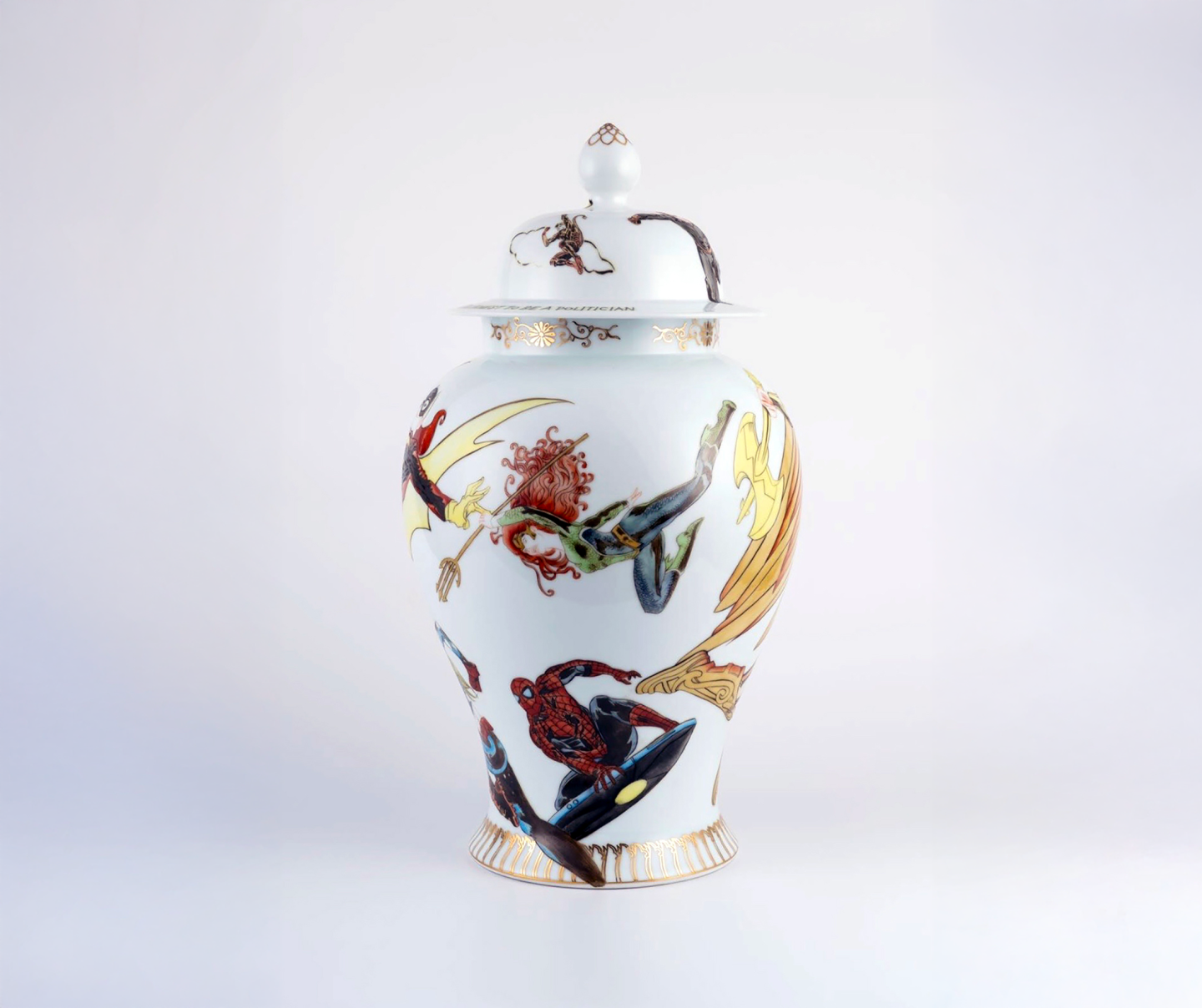
Anderson Ranch’s January Studio Sessions provide artists the opportunity to work on independent projects while receiving mentoring and critique sessions with Anderson Ranch artistic staff and interns. Each participant receives an assigned studio space, orientation, and access to equipment, as well as some morning group demonstrations and / or critiques. This program affords artists the experience enjoyed by national and international artists who access our state-of-the-art studios. Participants may expand their practices, take artistic risks, try new media or complete works for exhibition. *Studios are open 24 hours a day and on weekends for students enrolled in multiple weeks, with limited use of equipment due to safety requirements. There are no staff hours or kiln-firing on weekends. IMPORTANT DETAILS: Students will be responsible for all material costs associated with their projects. Private dorm rooms are available at Anderson Ranch for an additional fee; click here to view January 2027 lodging options. Breakfasts and dinners are included in the dorm fee. Lunches are included in the studio fees. TO APPLY: Applicants must submit project proposals or portfolios for approval. Contact Betsy Alwin to apply: [email protected]
-
P
Portfolio Review Required
Students have advanced skills and knowledge of the ceramics field. Students are highly motivated, have a minimum of five years experience in the field and have a portfolio of their artwork. Typical students are academics and professional artists.
-
AMS
Advanced Mentored Studies
Aug 9 - 20, 20279AM - 5PM
Advanced Mentored Studies: Centering a Ceramic Studio Practice Through Material and Meaning
Audrey An, Shoji Satake
Tuition $3,000
Code C1101-27
This three-year mentorship program supports ceramic artists in deepening their practice and expanding their professional portfolios through guided mentorship within an immersive studio-research environment. Participants receive individualized support, dedicated studio time, and critical dialogue while working independently within a collaborative community of peers. The program emphasizes conceptual development, craftsmanship, experimentation, and interdisciplinary approaches. Over its course, artists refine their practice, develop innovative methods, and complete a capstone project that reflects their artistic growth while exploring clay's unique capacity to shape ideas, narratives, personal histories, and identities in transformative ways. COURSE COMPONENTS Expand and refine professional practice and artistic portfolio. Receive individualized support, dedicated studio time, and critical dialogue. Deepen conceptual development, craftsmanship, and interdisciplinary approaches. Work independently within a community of peers in an immersive studio research environment. Complete a capstone project. IS THIS WORKSHOP FOR YOU? The mentorship program is for established professional artists at any stage of their career who seek a rigorous program to expand their knowledge and skills within the contemporary field of ceramics.