
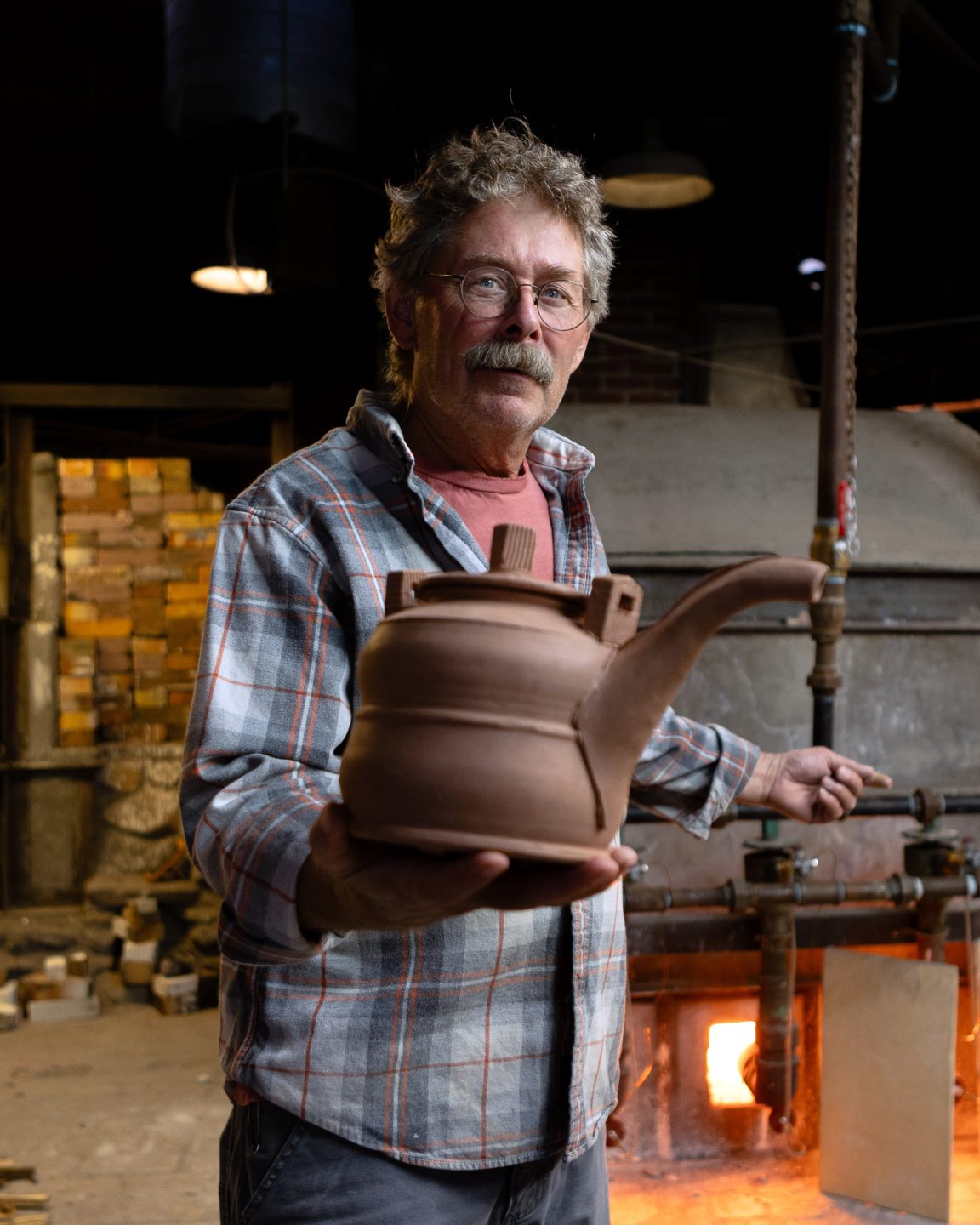
Doug Casebeer
Doug Casebeer teaches, lectures, and builds kilns worldwide, and recent projects have taken him to Brazil, Jamaica, and Chile. Casebeer has over 45 years of experience in the ceramics field, and has taught well over 300 workshops around the world. He has been recognized for his leadership in the field by NCECA, Anderson Ranch Arts Center, and the Huntington Museum of Art. His work is represented by the Harvey Preston Gallery, Red Lodge Clay Center, and the Schaller Gallery.
Doug's Links:
Doug's Workshops
-
III
Level III
Students have significant experience with clay forming techniques, such as throwing, hand building and modeling. Students are comfortable with ceramics equipment, such as wheels, extruders and slab rollers. Students are self-starting with some formal training and have taken a minimum of three classes or workshops.
-
IV
Level IV
Students have advanced skills and knowledge of the ceramics field. Students are highly motivated, have a minimum of five years experience in the field and have a portfolio of their artwork. Typical students are academics and professional artists.
Jul 27 - Aug 7, 2026Past9 AM - 5 PM
The Language of Pottery: Ideas and Techniques
Doug Casebeer
Tuition $2,100
Code C0910-26
Students focus on developing ideas that resonate with personal meaning and content through exercises and projects that bring forward shapes and forms with thoughtful resolutions. Students are challenged to create pottery and vessels that explore individual life experiences and add new techniques that further develop skills. Participants engage in making objects for the home and kitchen, bringing pleasure into everyday routines.
-
III
Level III
Students have significant experience with clay forming techniques, such as throwing, hand building and modeling. Students are comfortable with ceramics equipment, such as wheels, extruders and slab rollers. Students are self-starting with some formal training and have taken a minimum of three classes or workshops.
-
IV
Level IV
Students have advanced skills and knowledge of the ceramics field. Students are highly motivated, have a minimum of five years experience in the field and have a portfolio of their artwork. Typical students are academics and professional artists.
Jul 15 - 26, 2024Past9AM - 5PM
Sense of Place: The Artist's Voice
Doug Casebeer
Tuition $1,450
Code C0707-24
It is often said that we are a product of our environment, our background, and the sum of our experiences. This class explores these sources for inspiration through exercises and projects that tap the potential of the creative spirit. Students need an open mind to explore the depths of their own personal history for artistic ideas—and must have a willingness to fail. This advanced class focuses on taking risks with process and techniques as we work with high-fire clay to make vessels, sculptures, and pottery. Students can expect to leave with a better understanding of their art practice.
-
I
Level I
Students are new to ceramics and have no formal training.
-
II
Level II
Students have a basic understanding of forming techniques, such as throwing and hand building. Students have taken one or two ceramics classes or workshops.
-
III
Level III
Students have significant experience with clay forming techniques, such as throwing, hand building and modeling. Students are comfortable with ceramics equipment, such as wheels, extruders and slab rollers. Students are self-starting with some formal training and have taken a minimum of three classes or workshops.
Jul 4 - 8, 2022Past9AM-5PM
Finishing Follows Form: Glazing and Firing
Doug Casebeer
Tuition $1,450
Code C0507-22
Just when you thought you had mastered working in clay, along comes glazing. In this workshop, students explore techniques, present strategies, glaze wares and load a kiln, all on the first day. Conversations concern creative potentials for successful glazing strategies. There are lectures on basic glaze formulations and kiln-firing systems. Risk-taking is encouraged to develop a more personal and meaningful artistic voice. There are demonstrations on both hand-building and wheel-throwing techniques, as well as lots of tricks and tips for glaze application. Students are asked to bring 10 to 12 pieces, bisque-fired to cone 06 with a minimum 2” diameter and a maximum 9” height. Tumblers, vases, cups, pitchers and small sculptures are ideal.
No workshops to show.